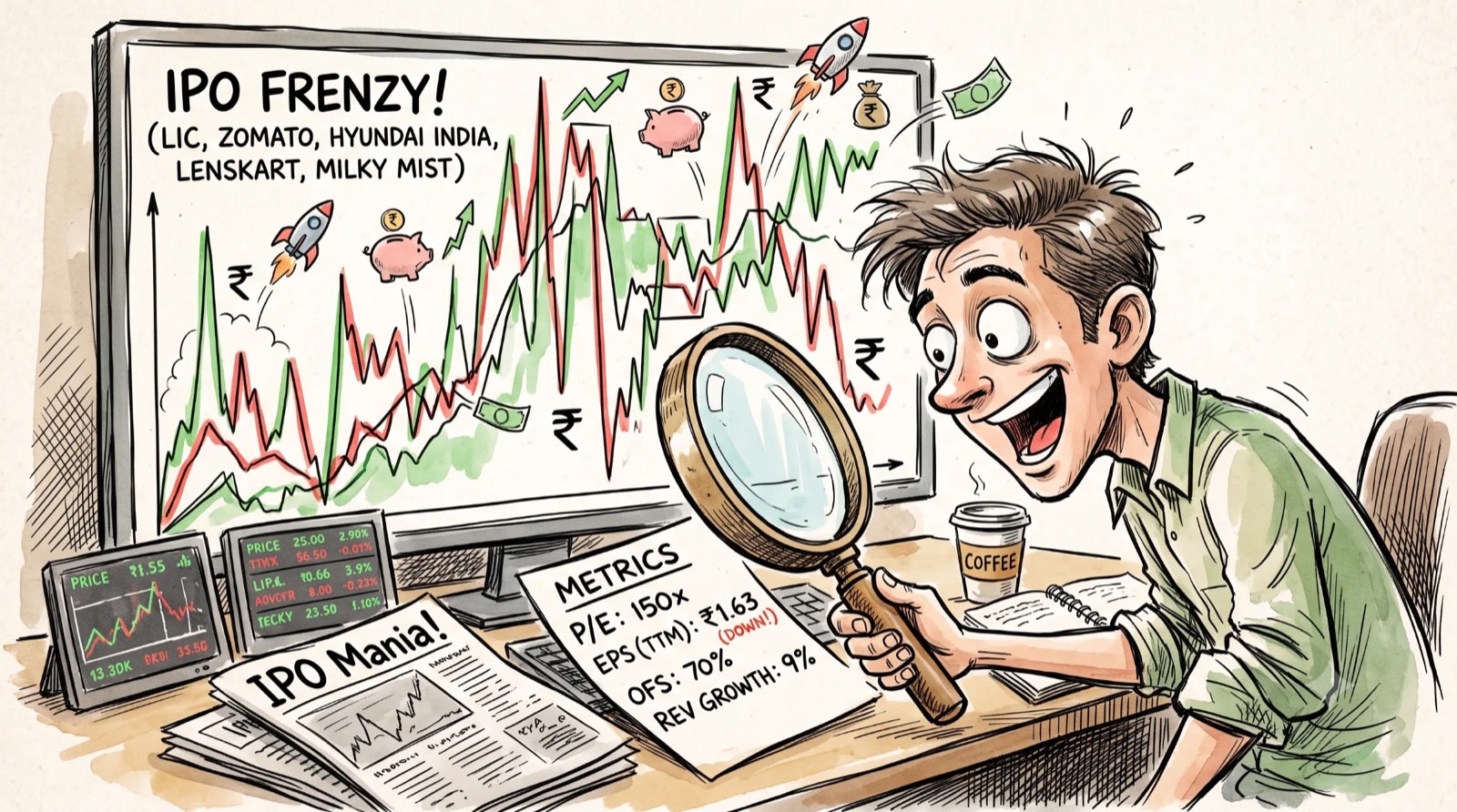
“My portfolio returns look lower than an FD. Then why am I investing here?”
This is a question I have heard from several clients during portfolio reviews. And I understand why they ask.
You are setting aside money every month. You are accepting the ups and downs of the market. Then you open the app, look at the return, and wonder whether a simple fixed deposit would have done the job better.
It deserves a proper answer.
A mutual fund return below an FD rate is a reason to review. Whether you should change the investment depends on how you are comparing the returns, the risk involved, and what you need the money for.
Let me explain how I look at this.
Before the return, let us look at the plan
At TMOTRAC, when we start working with someone, there is quite a bit to understand before choosing investments.
Their monthly income. Their expenses. Whether they have money available for an emergency. Their insurance. Their responsibilities. What they want to do with their life, and how much money those things will need.
Then comes another question: how much can they realistically set aside?
Because we can write down several goals. Funding all of them is where the difficult conversations begin.
Sometimes one goal has to wait. Sometimes the target has to become smaller. Sometimes the person needs a little breathing room before increasing their investments.
So the portfolio that comes out of this process has a purpose. The money needed soon and the money meant for much later may be invested differently. The goal, time available, and ability to take risk should influence that choice. SEBI explains these investment considerations here.
When we open the app and judge all of that through one return percentage, we lose some of the context.
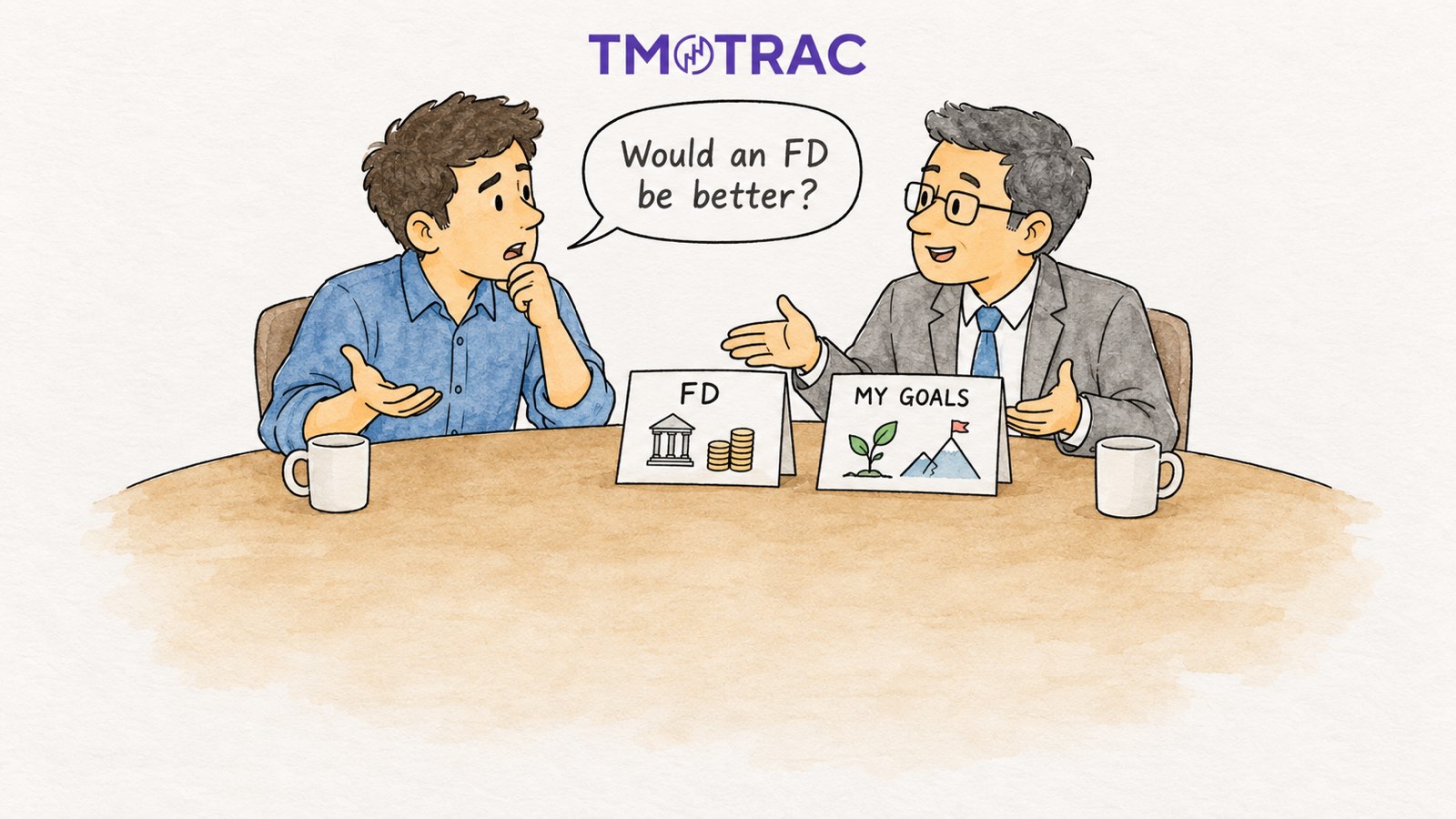
But still, would an FD have been better?
That question still needs answering.
An FD can be a suitable choice. If the money is needed on a particular date and you cannot afford much uncertainty, predictable interest may be exactly what you want.
But first, we need to check what the two numbers mean.
Suppose you have been investing a little every month through an SIP, a systematic investment plan. The first instalment has been invested for much longer than the most recent one. All your money has not had the same time to grow.
Your app may show XIRR, an annualised return that uses the dates and amounts of your investments and withdrawals. It may instead show an absolute percentage gain. Those are different measures. Microsoft's explanation of XIRR covers why transaction dates matter.
Now think about the FD you are comparing it with. Was that rate available when you invested? For what tenure? Does the interest compound, or get paid out? Would you have had the full amount available at the beginning?
A fair comparison uses matching dates and cash flows. For monthly savings, a recurring deposit or a series of deposits may be a more useful comparison than assuming the entire amount was in one FD from day one.
Then comes tax.
The return you see and the money you keep
Interest on an ordinary taxable bank FD contributes to taxable income. Your actual tax depends on your circumstances. Income Tax Department guidance.
Let us use a simple, hypothetical example.
You deposit ₹1 lakh for one year and earn ₹7,000 in interest. If we assume a 20% tax on that interest, ₹1,400 goes towards tax. You keep ₹5,600.
So a 7% return becomes 5.6% in this simplified calculation. This is an illustration, not a current bank offer; it ignores compounding, cess, surcharge, rebates, and deductions.
But we cannot stop there and declare that the mutual fund has won.
We need to account for tax on that investment too. Mutual fund tax treatment can depend on the fund category, when you bought it, how long you held it, and your circumstances. The gain showing in your app may be before any tax payable on selling. AMFI's mutual fund tax guidance.
Compare both before tax, or work out both after tax. Applying tax to only one side gives us an incomplete answer.
And even after doing this, the risks remain different. A mutual fund can lose value. A bank FD has agreed interest terms, although early withdrawal can affect the interest you receive and may attract a penalty. RBI's deposit FAQ.
A higher return matters. So does whether you can live with the risk required to pursue it.
There may be another problem hiding behind the return
Let us imagine someone needs ₹3 lakh in two years. They are starting from zero and can save ₹4,000 a month towards it.
Over two years, their contributions add up to ₹96,000 before returns.
Now suppose they ask whether we can find a fund that earns a little more.
We can review the fund. But look at the gap. The target is ₹3 lakh, and the contributions are ₹96,000. A slightly better return cannot be relied on to make up the difference.
This example is hypothetical, but the planning problem is familiar.
We may need to increase the monthly contribution, give the goal more time, or reconsider the amount needed. And increasing the contribution is not always easy. People have rent, family responsibilities, and a life to live.
That is why prioritising goals is part of financial planning too.
At the same time, an underfunded goal does not excuse a poorly performing investment. Both deserve attention. We should check the fund against a suitable benchmark over matching periods, while separately reviewing whether the goal has enough funding.
What I want you to ask at your next review
Please do look at your portfolio returns. You should know how your money is doing.
Then take the conversation a little further:
- What is this money for, and when will I need it?
- Am I contributing enough for that goal?
- Am I comfortable with the risk I am taking?
- Is the investment doing reasonably against a suitable benchmark?
- Has anything in my life changed since we made this plan?
Sometimes that review will lead to a change in investments. Sometimes it will lead to a change in contributions or the goal itself. Sometimes the plan still fits, and the comparison simply needed more care.
I discussed a similar question in my article on mutual funds versus direct stocks: what is this money actually for?
That question belongs in the FD conversation too.
At TMOTRAC, these are the conversations we continue having after the investments have started. Because your income, responsibilities, and priorities can change. Your financial plan needs to keep up with them.
If you have been looking at your portfolio and wondering whether it still makes sense, message me on WhatsApp at +91 96556 88986. Let us look at what you are trying to achieve and how your money is helping you get there.
General financial education; not a personalised investment recommendation. Numerical examples are hypothetical. Mutual fund investments are subject to market risks; read all scheme-related documents carefully.